Wearing the City
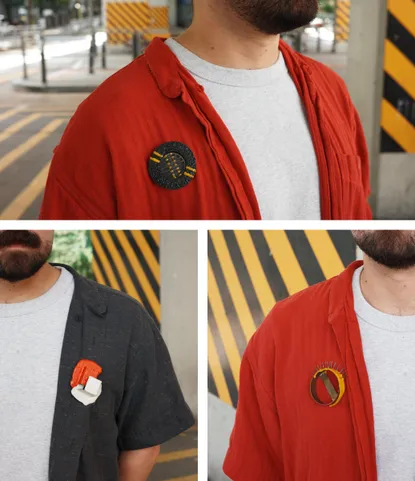
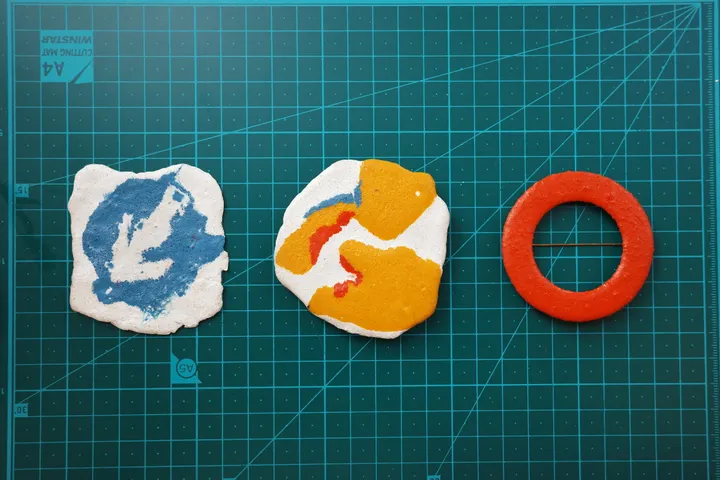
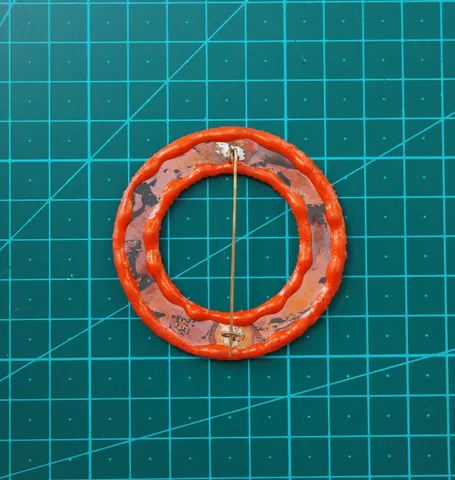
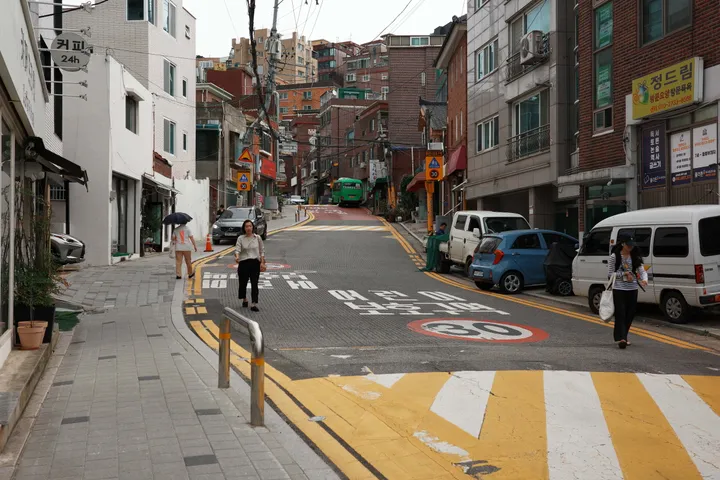
These brooches are made, among other materials, with thermoplastic road paint: the same paint used to mark streets all over the world. The arrows, lines and colours we walk over every day, worn on the body instead.
Wearing the City (2026)
Walnut
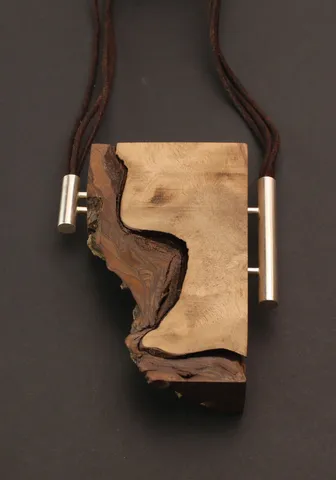
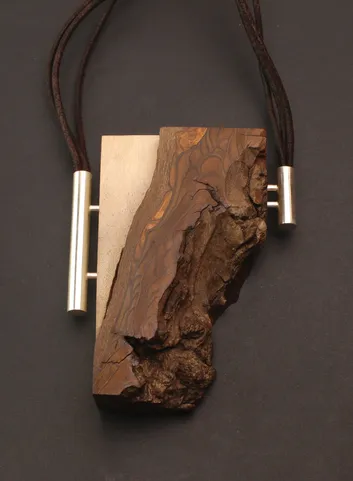
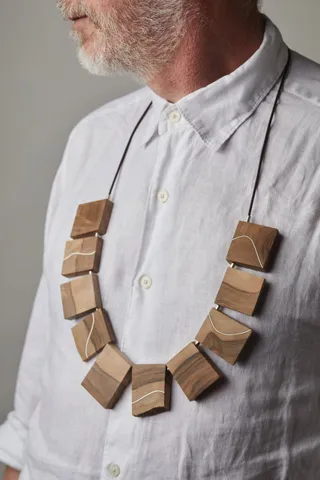
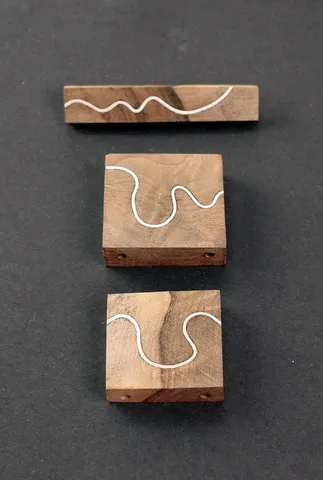
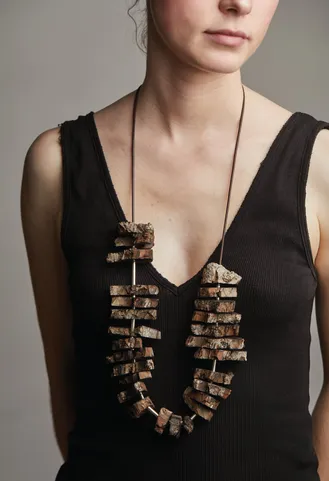
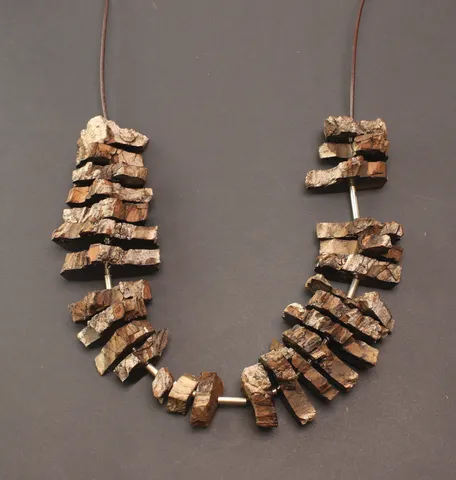
The wood used to make these pieces was recovered from a felled walnut tree in a demolition site in South London.
I made three necklaces by experimenting with all three boundaries of walnut wood: hardwood (core), sapwood and bark.
Ready-made clasp (2025) · Inlay sapwood necklace (2025) · Bark necklace (2025)
Cocktail rings
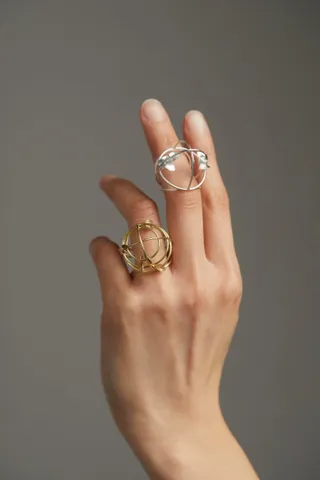
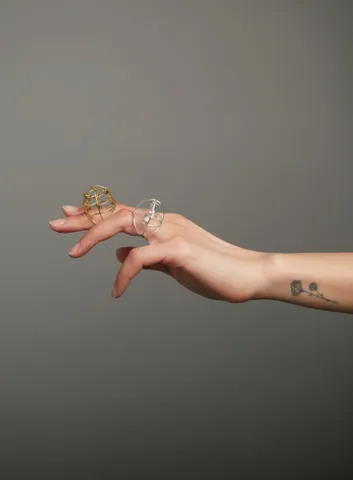
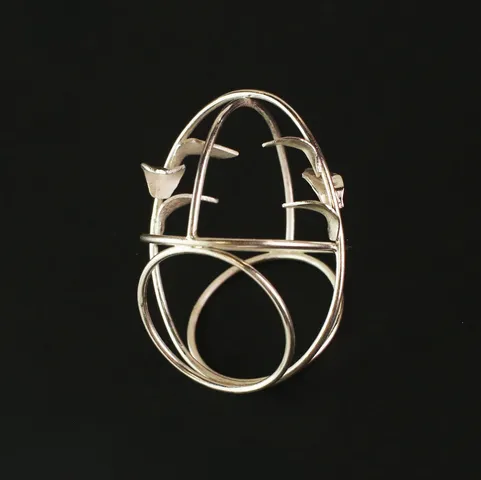
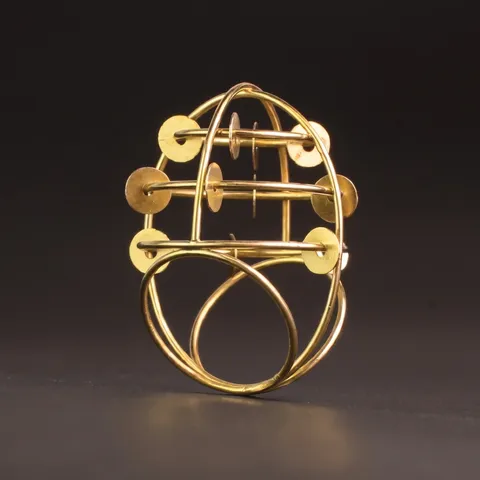
Untitled (2025)
Loom Rings
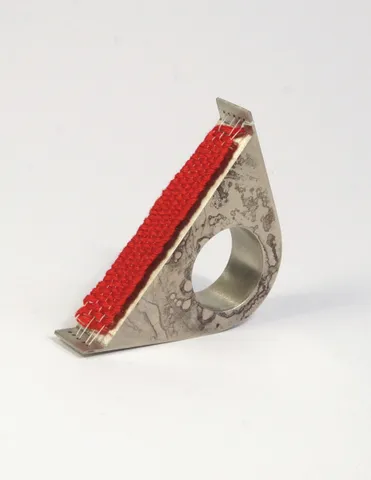
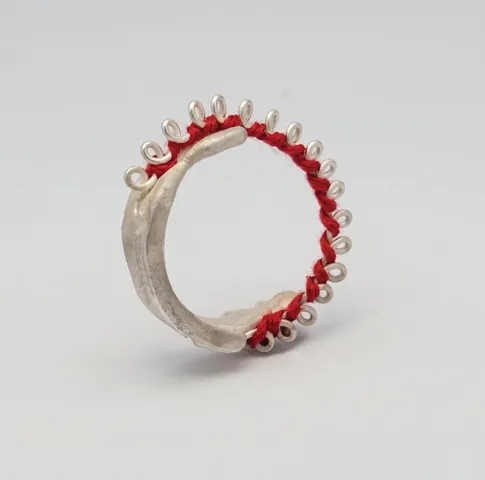
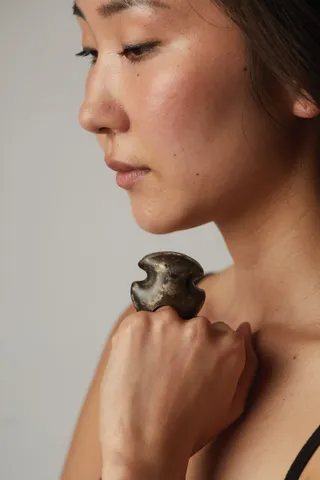
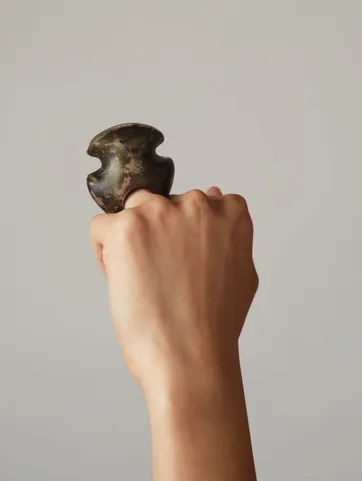
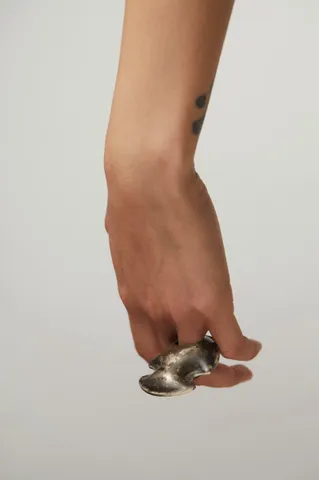
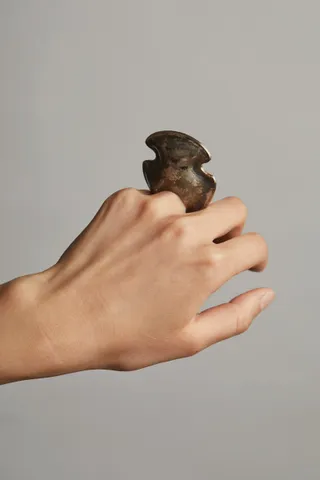
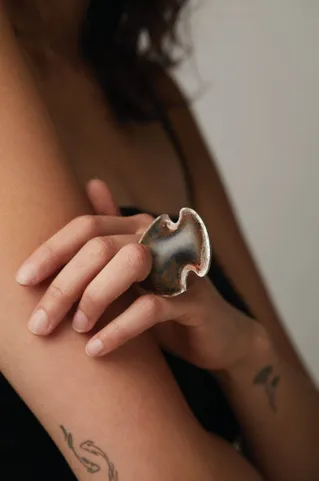
Maya women have long woven on backstrap looms — portable looms tied to the body, with one end fastened around the weaver's waist. The weaver's own posture and movement create the tension needed to weave, making her an active part of the machine rather than a separate operator of it.
Loom Rings extends this idea: wearable objects that themselves produce other wearable objects. The loom ring functions as a miniature loom worn on the finger, generating small cloth rings sized to fit the wearer who made them.
Loom Rings (2025–2026)
Engagement rings
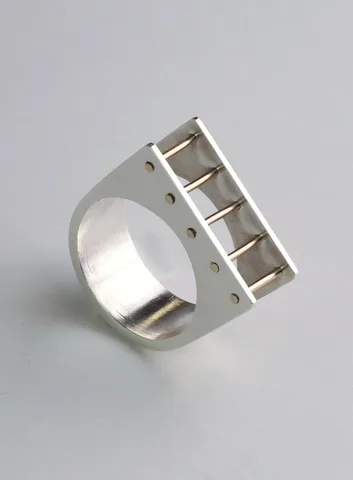
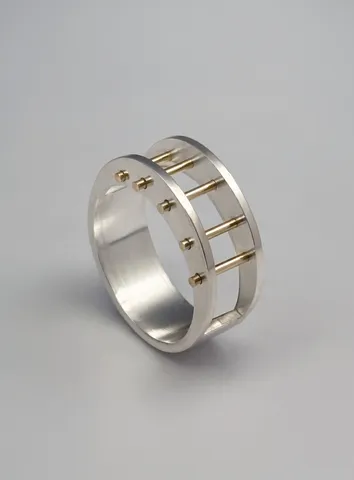
I proposed to my now-husband with this ring. It's made of soldered sterling silver sheet, with five gold wires held in tension by small riveted ends.
While fidgeting with it, my husband bent the ring's walls inward — just enough that the wires started to rattle loose inside. He was worried he'd broken it, but I loved the tactility of the loose wires, the new rattling noise, the accident of it.
I realised that my original vision, where the wire is held in place, was unnecessarily rigid; the tactility, the playfulness of the loose wires made it more interesting, more fun.
When I made my own matching ring, I made the rods 2mm longer on purpose, so mine would rattle too. I wear it every day and it reminds me that even when things don't go as planned, being open to surprises can actually bring the most joy.
Engagement rings (2025)
Silver and pearl
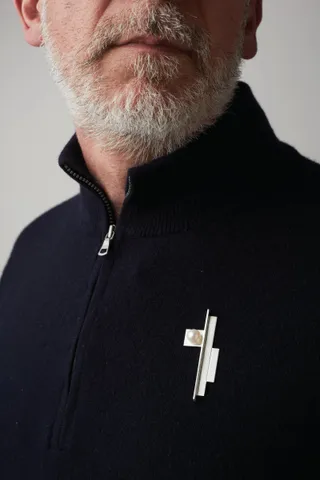
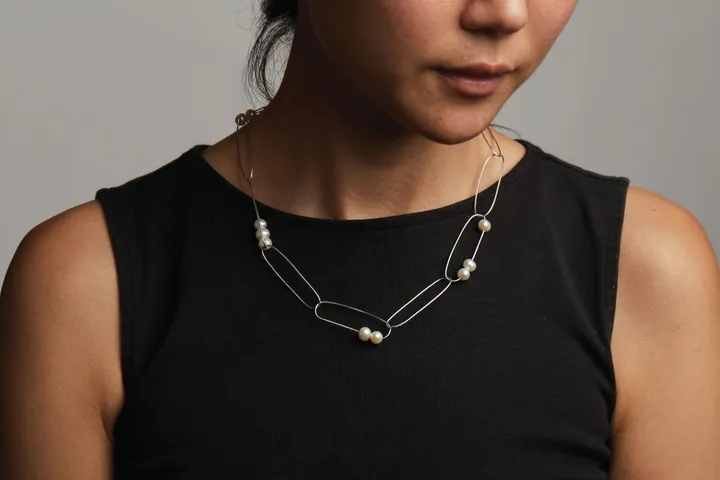
Silver is hard, cold, elemental. It takes whatever shape you give it and holds it. It's also the best conductor, taking on heat easier than any other metal.
Pearls are the opposite: organic, fragile, formed slowly and imperfectly by a living thing. Where silver conducts heat, pearls can't tolerate it — even slight warmth will ruin them.
Working with both means constantly negotiating between control and surrender, precision and irregularity.
Silver and pearl (2025–2026)
Architecture rings
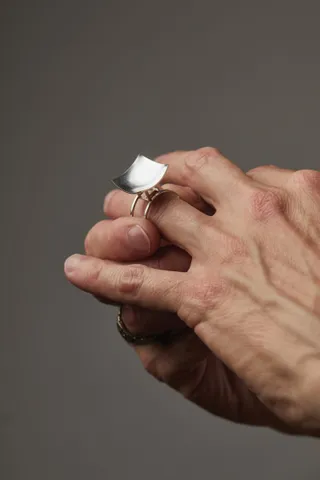
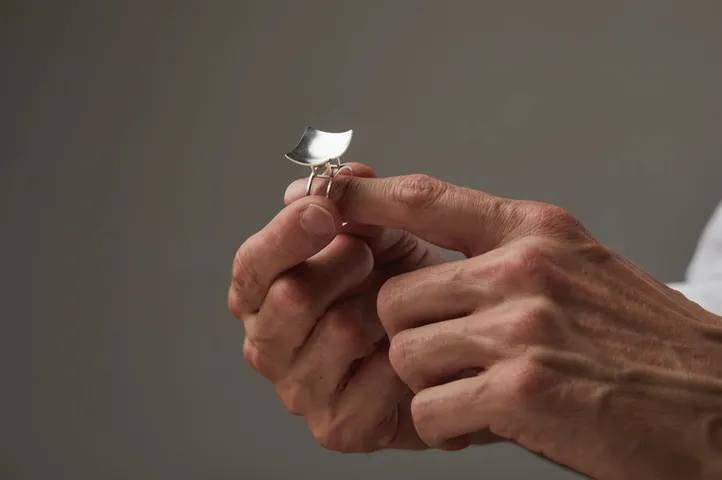
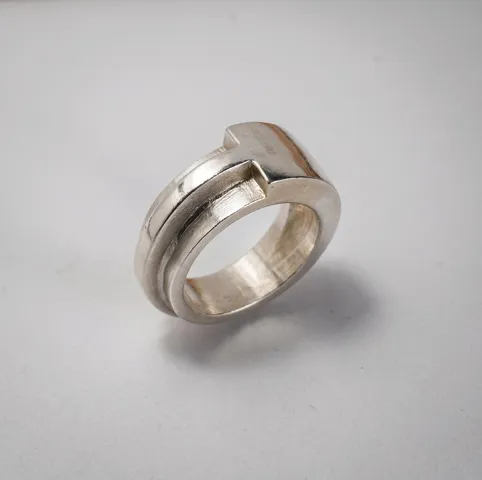
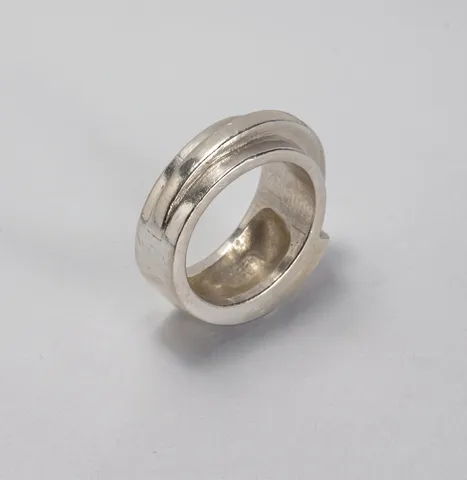
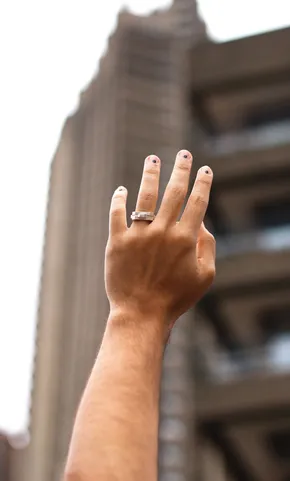
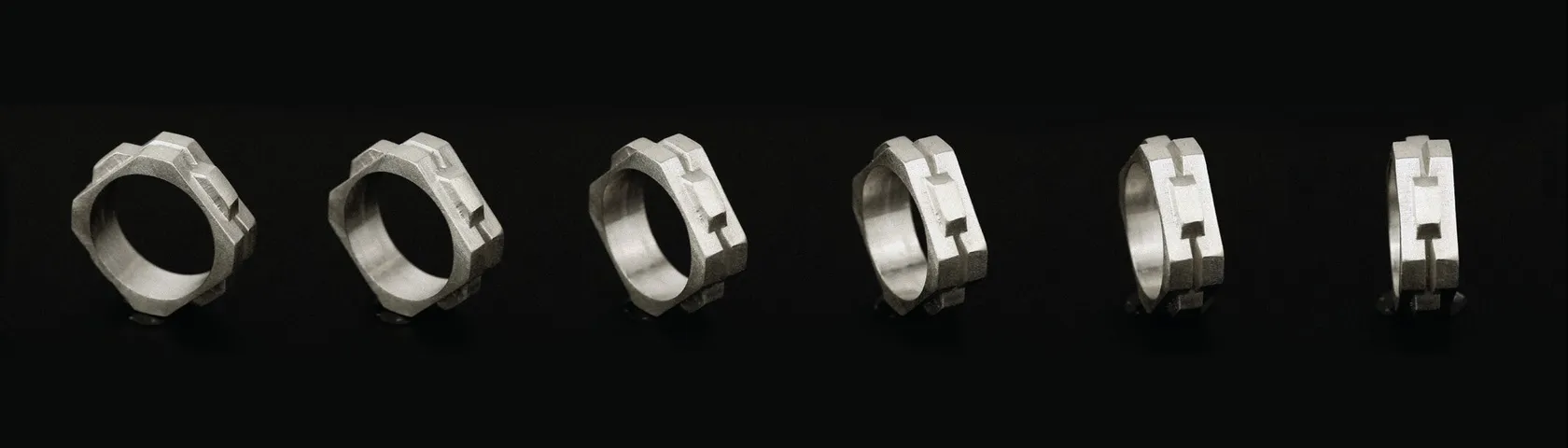
Seoul French Embassy Ring (2025) · Preston Ring (2023) · Croydon Ring (2023)
Stet fortuna domus
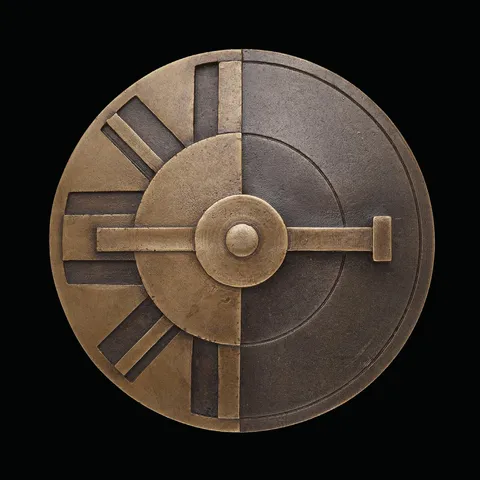
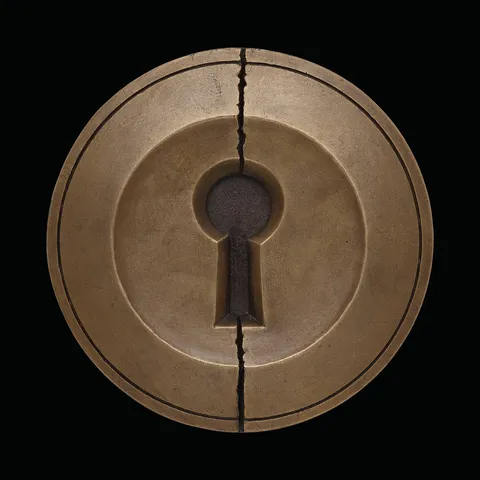
The crux of Britain's housing crisis lies in the transformation of the home from a basic necessity into a financial asset. House prices—now far beyond reach of the average Briton—have grown into a ticking time bomb upon which the entire British economy relies. For renters, the cost of renting a home has risen faster than anytime in recorded history, and even those lucky enough to pay a mortgage instead now face unaffordable monthly payments through higher interest rates.
This bronze medal illustrates the current state of British housing: a luxury good that for many Britons represents the most significant barrier to financial stability and opportunity.
Acquired for the permanent collection of the British Museum, the Royal Mint, the Goldsmiths' Company and the American Numismatic Society in New York, as well as other private collections around the world.
Awarded Bronze Award in the Smallworkers category, Goldsmiths' Craft & Design Awards 2026. The original design was awarded Gold Award in the Design category, Goldsmiths' Craft & Design Awards 2024.
Stet fortuna domus (2025)